


With trucks moving over 70% of freight by weight in the U.S., they hold a significant place in the logistics industry. There are several types of trucks used in logistics, each with unique features and advantages. For reliable and efficient delivery solutions, it’s crucial to choose the right truck for your logistics needs.
Whether you’re in the market for a new or used truck, this guide outlines the different types of trucks for logistics, including what to look for when selecting a truck.
Why Truck Selection Matters in Modern Logistics
There is such a thing as the “right” truck in logistics — not all trucks offer the essential features you need for effective and efficient operations. Selecting the wrong truck can lead to delayed deliveries, damaged products, and frequent and expensive repairs.
Choosing an appropriate truck offers the following benefits:
- Safety: The right truck helps keep drivers and other road users safe. With features such as stability control, GPS tracking systems, surveillance cameras, and advanced braking systems, the proper truck can reassure your drivers that they’ll enjoy increased safety on the roads.
- Fuel efficiency: Fuel consumption is a crucial consideration when selecting the type of truck for logistics. The right truck offers the best-in-class fuel efficiency features, resulting in increased cost-effectiveness.
- Reliability and reduced downtime: By choosing an appropriate truck, you minimize downtime caused by operational inefficiencies and breakdowns.
- Suitable load capacity: The truck you choose directly impacts the quantity of cargo you can transport. With the right vehicle, you can maximize load capacity.
What Are the Main Types of Trucks Used in the Logistics Industry?
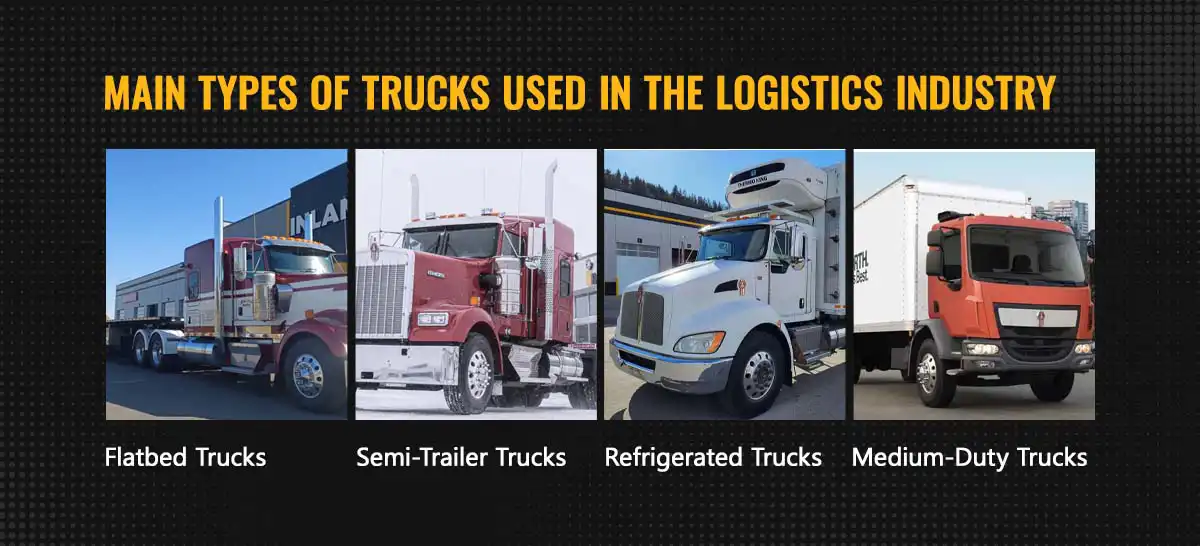
The logistics industry is vast and uses a wide range of trucks. This section outlines various types of trucks used in the logistics industry, their use cases and advantages.
Flatbed Trucks
Flatbed trucks are designed without a roof, walls, or doors and are suitable for shipping bulky and oversized cargo loads that may be difficult to transport using trucks with enclosed beds. In place of doors and enclosures, flatbed trucks use racks and stake pockets to protect the cargo. However, you must take extra safety measures to ensure the cargo is adequately fastened to the deck. There are different kinds of flatbed trucks, including extended flatbeds, lowboys, and double drops.
Some pros of this truck include:
- Versatility: Flatbeds are versatile and can be helpful for heavy, irregularly shaped and large-scale cargo shipments. Whether you’re transporting large machinery, construction materials, or bulky agricultural products, flatbed trucks are a suitable option. They also come in various lengths and sizes to accommodate different shipping needs.
- Towing capacity: Flatbed trucks have sufficient capacity and endurance to serve as tow trucks, which can be particularly helpful in emergencies.
- Easy loading and offloading: Since flatbed trucks lack walls, roofs, and doors, loading and unloading cargo is often easier. The decks on these trucks are more accessible, making them useful for situations where you may need equipment, such as forklifts and cranes, to load heavy cargo.
Semi-Trailer Trucks
Semi-trailer trucks, also known as semis, are heavy-duty trucks with a wide range of applications in the logistics industry. Designed with a cab and an attached semi-trailer, these trucks are available in various sizes and are well-suited for long-distance transportation of large volumes of cargo. With semi-trailer trucks, drivers require specialized driving skills and knowledge of key operating parameters, such as the turning radius.
The advantages of semi-trailer trucks are as follows:
- Increased cargo capacity: Semi-trailer trucks have large storage capacities and are advantageous for logistics businesses with large-scale hauling operations.
- Protection from extreme weather conditions: Unlike flatbed trucks, semi-trailer trucks feature enclosures that shield cargo from harsh weather conditions, including rain and snow.
- Flexibility: The trailers in semi-trailer trucks are detachable, meaning drivers have more flexibility to detach cabs and switch to another job while the trailer is unloaded. This flexibility reduces downtime.
- Long-distance transportation: Semi-truck trailers are effective for long-distance hauls.
Refrigerated Trucks
As the name suggests, refrigerated trucks, also known as reefers, are designed to transport various types of cargo that require temperature control, including perishable items, food, and pharmaceuticals. This truck is ideal for transporting temperature-sensitive products over long distances without compromising the standards required to maintain quality.
Reefer trucks are equipped with a refrigeration unit and insulated walls to maintain optimal internal temperature conditions. Refrigerated trucks have several benefits, including:
- Temperature control: Reefer trucks are ideal for the long-distance transportation of products with varying temperature requirements.
- Maximum durability: Reefers are built to last and feature reinforced walls and flooring to support maximum payload capacity.
- Improved efficiency: With advanced technologies such as fuel-efficient engine designs and tire inflation systems, reefers offer improved operational efficiency.
Medium-Duty Trucks
Medium-duty trucks have a Gross Vehicle Weight Rating (GVWR) between 14,001 and 26,000 pounds. The maneuverability, power, and size of medium-duty trucks make them an excellent choice for heavy-duty hauling. Larger than typical pickup trucks, these trucks have several advantages:
- Larger hauling capacity: A higher GVWR means a larger hauling capacity, making medium-duty trucks suitable for transporting heavier cargo, including heavy machinery and construction materials.
- Ease of driving: Medium-duty trucks are easier to drive and maneuver than larger vehicles, like semis. They are also safer to transport heavy cargo, especially when you have to drive on hilly roads.
Factors to Consider When Choosing Truck Types in Logistics
The kind of truck you choose can either improve or hinder your business, so you must pick the right one. The best choice depends on several factors, including:
- Size and weight of cargo: These factors are among the most important considerations when selecting a truck. If you frequently haul heavy and large-sized cargo, a larger-capacity truck will be more suitable for your logistics needs.
- Type of cargo: Consider whether you’ll be transporting temperature-sensitive or oversized cargo, as these kinds of freight require specialized trucks.
- Travel distance: Certain trucks are better suited for long-haul trucking than others. For instance, trucks such as semi-trailer trucks and medium-duty trucks have greater capacity for long-distance travel.
- Road conditions: The roads in your travel routes are a crucial factor to consider when selecting a truck. Choose trucks that can navigate the road and terrain conditions you’ll frequently encounter.
Find the Right Truck for Your Logistics Needs at Inland
The truck type makes all the difference in logistics and can be a crucial factor in determining operational efficiency. Whether you’re managing a large fleet or seeking the best trucks for owner-operators in the logistics industry, you need an appropriate vehicle to stay effective and competitive.
At Inland, we understand the crucial role trucks play in logistics. Our trucks are designed with features that prioritize and foster fuel efficiency, driver comfort, and environmental safety, among other considerations. With over 70 years in the trucking industry, we can help you find the best truck for your unique needs. Find an Inland dealership near you today.